Environment

You are currently browsing articles tagged Environment.


Image: Stellantis

The Jeep Wrangler 4xe plug-in hybrid is a very advanced SUV — as far as Jeeps go, anyway. Despite this, some examples on the road appear to have an issue counting, because they’ve been recalled for odometers that freeze at exactly 13,342 miles and then stop displaying entirely.

Advertisement

National Highway Traffic Safety Administration campaign #21V949000 warns that as many as 2,903 plug-in hybrid Wranglers — all model year 2021 and all manufactured between September 8, 2020 and September 13, 2021 — could fall victim to the issue. It stems from instrument panel cluster software that may have been preinstalled on newer examples, or updated at a dealer for those built earlier in the run.

Supposedly the digital odometer reaches 13,342 miles (21,473 kilometers) and then the value disappears. “A missing odometer reading could lead to an unintended delay in critical safety-related maintenance, potentially impairing the safe operation of the vehicle and increasing the risk of a crash,” an NHTSA document dated December 14 reads.

It could also lead to an unscrupulous seller trying to rip off a prospective buyer, though the report makes no mention of that. You’d have to be a pretty careless shopper to be unable to verify mileage and blow past that red flag, but anything can happen. I suppose it’s better than if the clock froze at 13,342 miles but kept displaying, at least.

To fix this, Wrangler 4xe owners who have traveled less than 13,342 miles in their vehicles will be contacted for a free instrument panel update in late January. Those Wranglers that have more than 13,342 miles — at which point the odometer likely won’t show at all — will automatically get full cluster replacements. And anyone who has already paid for such service will be reimbursed, as the report notes. The more new software in cars, the more we’re going to keep seeing weird things happen when that software goes awry.

For GREAT deals on a new or used Chrysler, Dodge, Jeep or RAM in St. Louis check out Laura Chrysler Dodge Jeep RAM TODAY!

Tags: , , , , , , , , , , , ,


Photo: BMW

BMW said Friday that it would stop making internal combustion engines at its Munich plant by 2024, in another step towards going even more in the direction of electric. This is not an end to new internal combustion engine production for BMW, but it feels like the beginning of the end.

Advertisement

From Reuters:

The ICE engines currently made in Munich will be produced in BMW’s factories in Austria and the UK in future, production chief Milan Nedeljkovic said, though cars using the engines will still be assembled at the Munich plant.

Still, by 2023 at least half the vehicles produced in Munich would be electrified - either battery electric or plug-in hybrid, the company said.

BMW has set itself a target for at least 50% of new global car sales to be electric by 2030, and CEO Oliver Zipse said at a conference last week the company would be ready with an all-electric offering if any market banned ICEs by then.

BMW’s next big EV offering — in America, at least — is the iX, which is intended to be Tesla Model X competitor and which is really quite good and, at $83,200, is significantly cheaper than the $99,990 Model X. There is also the i4, which seems like a Model 3 competitor, or possibly a Model Y competitor if you want to be generous, and starts at $56,395. The i4 will also be the first all-electric BMW M car.

Europe, meanwhile, still gets the i3, which is no longer offered in the U.S., probably because it is a small electric car that was also very expensive, a particularly bad combination for the American market, even if the i3 was fine for what it was. Of the two all-electric BMWs that are coming to the U.S., the iX seems like it has the best shot, a car for people who live in the Northeast offended by Tesla and Elon Musk’s new-money vibe. I can’t wait, in a couple years, to see a bunch of them in Maine.

For GREAT deals on a new or used Chevrolet check out Winter Chevrolet TODAY!

Tags: , , , , , , , , , , , , , , ,

Screenshot: Wikimedia Commons, Audubon, Jason Torchinsky

Over the past two or three weeks, my home and all of the precious, precious cars parked by it have been the victims of a massive, possibly coordinated attack. The attack is a sort of carpet bombing, a raging shitstorm of literal shit, ejected (possibly with malice) from the quivering cloacae of many birds, leaving my humble fleet of shitboxes Jackson Pollock’d with thousands of spatter-strikes of dark, dark bird wastes.

I’m sick of it, and sick of being a victim, so I decided to get answers, once and for all. Even if it meant finding an ornithologist.

I’m sure there are many readers out there dealing with a similar situation — I mean, I hope so, because otherwise these birds have it in for me specifically, and I’m afraid that would be a war I’m not ready to fight.

Advertisement

I was actually awestruck at the scale of the shitsplosion I encountered when the first attack occurred. My whole property was dappled with the avian spatter, to the point that a skylight looked as if a pack of dogs attempted to eat a cauldron of chili on it.

Screenshot: Wikimedia Commons, Audubon

The coverage was comprehensive and surprisingly dense. This wasn’t just a few pockets of bird shit, it was an even, overall rain, forming a noise pattern like the static on an old CRT television screen, only one that’s formed by the background radiation of the cosmos, not the contents of some feathered jerk’s bowels.

In my head, I imagined a flock of buzzards or maybe some ostriches with hang gliders lazily circling my home just after devouring the entire contents of the dumpster behind Taco Bell, loudly and sloppily spraying out their filth. I turned out to be very, very wrong.

Advertisement

The one upside in all of this is that, finally, I get to contact an ornithologist for work, which has been a longtime dream. The ornithologist I contacted was John A. Gerwin, the Ornithology Research Curator at the North Carolina Museum of Natural Sciences, and he knew exactly what was going on.

He described the voracious car shit-dapplings as a

“…perfect storm of a bird (many rather), a plant and our vehicles.”

As far as the birds responsible for this, there are two suspects: cedar waxwings and American robins. Gerwin explained that these are the two species that gather in large flocks during fall and winter, and they consume mostly fruit in these seasons.

Advertisement

Gerwin then goes on to say

“That would be fine except now we have all these non-native Privet bushes in urban areas. And whenever I see images like yours and I can track down the source it is always Chinese privet.”

Advertisement

Aha! Now we’re getting somewhere! A focus for my wrath! Waxwings and/or robins plus Chinese privets!

Photo: Jason Torchinsky

Advertisement

Gerwin continued laying out his evidence:

“…these bushes can grow to 20 feet and host large clumps of berries that are a deep purple. And thus your splotches match. They also match what we recently saw in our neighborhood, just up the street.

In that case, the offending birds were Cedar Waxwing. Then a few weeks later, some Chinese Privet bushes about 10 houses away were host to a large mix of Robins and Waxwings. Houses/driveways on both sides have vehicles parked – I just looked the other way.

For the past week, I’ve been seeing huge numbers of robins at sunset, as they fly overhead to wherever they are roosting. In fact this evening a neighbor emailed me to ask about “all these birds I’m seeing at sunset. 100’s and 100’s….”. Again, these are robins. But waxwings are still around (they just don’t go flying around at sunset the way robins do).

Anyway my guess is your avian friends are waxwings but could be robins, or a mix. The fruit, I’m 98% certain is Chinese Privet.”

Advertisement

While I am certainly not happy with the local waxwings (or maybe robins), I’m really pissed at those Chinese privets, because they were never invited here. They’re an invasive species, crowding out all of the local flora, all because someone in the 1800s thought they looked pretty. Now they’re all over the American Southeast, where my cars are, and the result is I have to wash a Beetle and Pao and Changli (and a Tiguan, but it’s black so the pictures aren’t as dramatic) in the cold, cold weather.

What I’m saying is that I’m the real victim here.

Photo: Jason Torchinsky

Advertisement

I know it’s not really China’s fault, but I figured people would be more likely to click if I blamed it on the whole nation of China. But I am not happy with these privets, or the gluttonous birds that eat and gorge on their gross little berries.

So, how much longer am I going to have to endure this nightmare? Luckily, Gerwin had an answer for that, too:

“The other good news is that by mid March, those two species begin to depart from our area. And the waxwings are gypsies and move around. They may hang around a few days and then the fruit is gone and so are they.”

Advertisement

He also mentioned that perching locations are key here; like people, the birds don’t really like to shit while they fly, so they prefer to perch on branches and do their foul business. My yard — really, my whole neighborhood — is very tree-covered, so unless I park a mile away or magically summon an instant garage, I’m kinda’ boned.

Maybe I should just scour the neighborhood for these Chinese privet plants, tear them out by the roots and build a bonfire in the middle of the street. If they’re on a neighbor’s property, things may get complicated, but I’m sure once I scream about my cars enough, they’ll sympathize and assist me in tearing up their landscaping.

Advertisement

So, the takeaway here for anyone else suffering barrages of robin or waxwing-digested Chinese privet berries is that we shouldn’t have to deal with it much longer, and if you can avoid parking under trees, do so. And tear out your Chinese privets as soon as you can to prevent this in the future.

God help us all.

 

Tags: , , , , , , ,

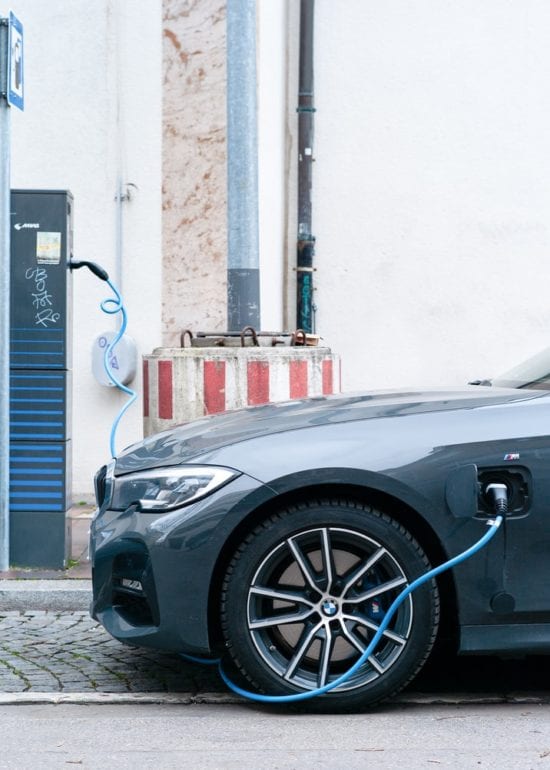
There is a steady shift to electric cars. Those who choose to go green and reduce pollution prefer using electric vehicles (EVs) over fossil-fuel vehicles. EVs have zero emissions and help users save the environment. They also save money that would have been spent to buy fuel. However, are EVs really good for the environment, and is green always clean? Do EVs cause more harm than the visible good we see? Let us take a closer look at where electric cars can cause more pollution.

Do Electric Cars Cause More Pollution?

Cars that use gas release harmful toxins. Simultaneously, EVs seem to provide a better solution because they don’t use gasoline and emit no toxic gases. They seem to cause no pollution and no potential problems for human and plant life. However, is there something we are missing when it comes to electricity EVs use? The following are areas in which electric cars can cause more pollution:

Power Generation and Transmission

Electric cars show no visible harm while they are on the road. However, when we trace them back to the source of power, some damage is done to the environment. The energy may be clean, but it is only as clean as the source of power. The primary sources of electricity are natural gas and burning fossil fuels, and coal. These are known to cause pollution.

A clean energy source is wind power, solar power, and hydro plants. These sources are yet to be widespread. Nuclear power is an alternative source, but this option also causes some environmental concerns. If electrical grids get cleaner, the total move from gasoline cars to electric cars will make more sense. This will be the only way to approach a zero-carbon transportation sector.

Life Cycle Assessments

There is a delicate balance between technology and trust. We recognize the need to move to EVs because they can help us reach zero emissions by 2030. However, the information being shared by manufacturers may not be entirely accurate. Technological advancements are assisting companies in creating better options, but there is the aspect of trust that also needs to be a priority. There is no uniformity since car makers use a range of different calculations in their Life Cycle Assessments.

Polestar’s methodology reveals that the Polestar 2 leaves the factory with a 26-ton carbon footprint. This is a higher amount compared to that of a Volvo XC40 with a petrol internal combustion engine. The reason for the larger carbon footprint is the energy-intensive battery production process. However, if the Polestar 2 is charged with green energy while in use, the carbon dioxide equivalent emissions are negligible. In the long run, the fossil-fuel car will have an overall emission greater than that of the EV.

Plug-in Hybrid EV (PHEV)

Some consumers want to cover longer distances and need more than electricity to travel. The plug-in hybrid EVs (PHEVs) are the best option in such cases. However, PHEVs have been found to emit much more carbon dioxide than is communicated in the ratings. A Greenpeace and Transport & Environment report argues that PHEVs are a “wolf in sheep’s clothing” because they produce 2.5 times more CO2 in real life than they do in the lab. Petrol and diesel cars emit 164-167g CO2/km respectively in real-world conditions, whereas PHEVs emit an average of 117g CO2/km. To put this in perspective, the official test results indicate PHEVs emit 44g CO2/km.

How you drive a PHEV determines the actual amount of emissions. A PHEV behaves like a conventional hybrid when you do not plug it in. Driving a PHEV at high speeds causes the fossil-fuel engine to fire up. This negates the emissions benefits of battery power.

Environmental Costs

We also need to analyze the full “lifecycle” of emissions. Environmental costs such as making the car, transporting coal, and drilling oil are factored in when looking at fossil-fuel vehicles. Fragmentation also makes EVs look good, but we need to look at the environment’s full impact. This is because even the cleanest cars still cause pollution, in one way or another.

More energy is required at the production stage of EVs than what is needed to produce standard cars. It may be a challenge determining the red flags when it comes to embracing green energy. However, nothing is impossible and continuous research, and product development brings about positive change.

Looking at the Bigger Picture

We need to appreciate that with every change, there may be advantages and disadvantages associated with it. By looking at the bigger picture and the result, we can understand that the main goal is not to harm the environment and ourselves. EVs are the means to this goal.

However, there are many improvements to be done, and manufacturers need to be transparent about the number of emissions that hybrid EVs release. Advancements may be made to lower the impact of the areas where electric cars cause more pollution. It also remains the fact that EVs travel further on a single joule of energy and, at the same time, release fewer emissions.

Tags: ,